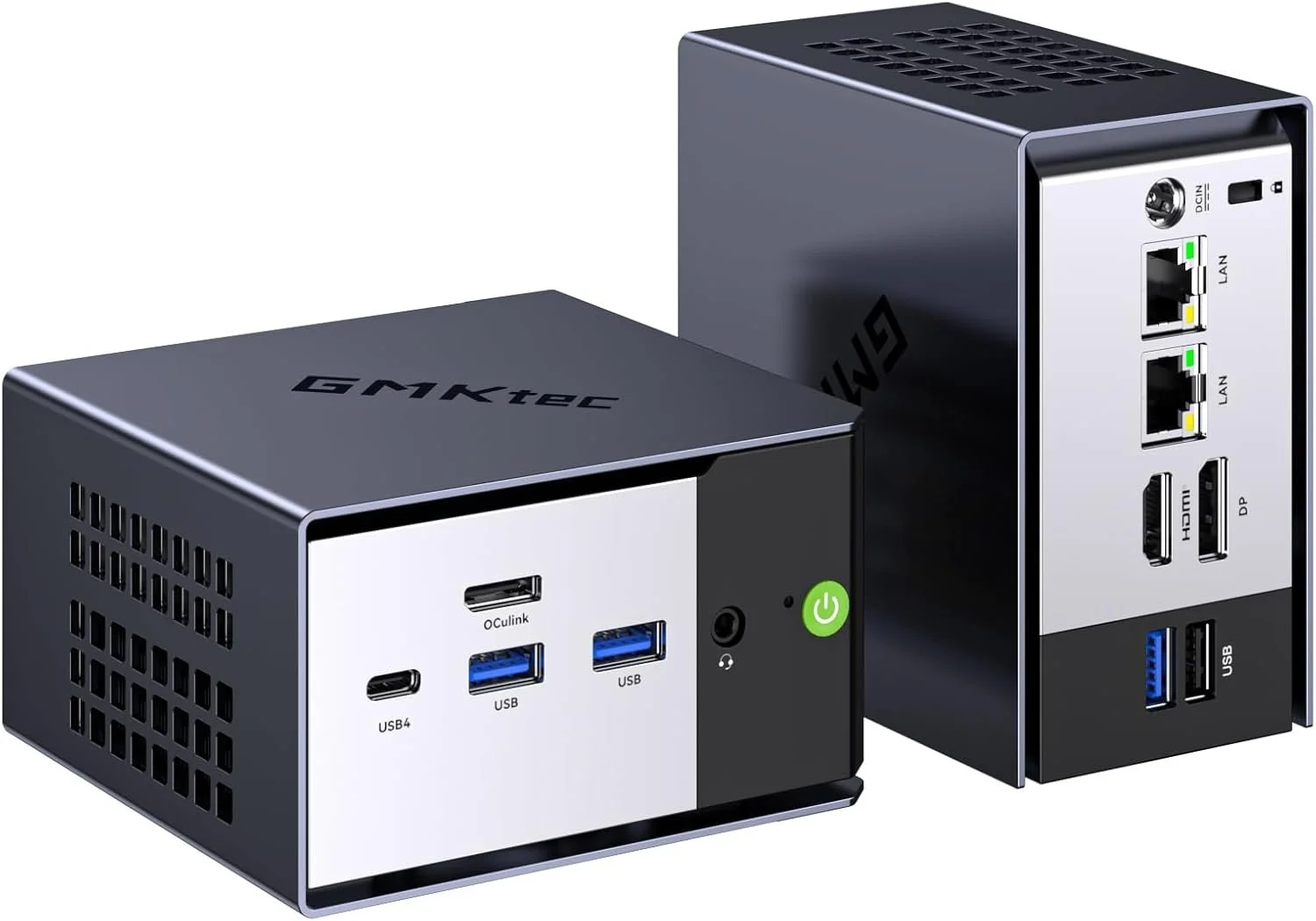
GMKtec M8 Mini PC Review: Ryzen 5 PRO 6650H with Dual 2.5G and OCuLink

The GMKtec M8 mini PC is not your typical compact desktop. On paper, it looks like another small Ryzen-powered box, but once you look at the ports and internal expansion, it becomes clear this system is aimed at power users, homelab builders, and anyone who needs serious connectivity in a tiny footprint.


Ryzen 5 PRO 6650H Performance

At the heart of the GMKtec M8 is the AMD Ryzen 5 PRO 6650H. This is a 6-core, 12-thread Zen 3+ processor built on a 6nm process. It boosts up to 4.5 GHz and can run up to 40 watts in performance mode.

In real-world use, that means:

  • Smooth multitasking

  • Strong performance for virtualization and containers

  • Plenty of power for Proxmox, Docker, and home server workloads

  • Comfortable 4K media playback

  • Light content creation and casual gaming with the Radeon 660M iGPU

This is laptop-class silicon, but configured in a way that makes it feel closer to a low-power desktop experience.

Serious Networking: Dual 2.5G LAN

One of the standout features of the GMKtec M8 is dual 2.5 gig Ethernet. That immediately puts it in homelab territory.

You can use it for:

  • Router or firewall builds

  • Network segmentation

  • High-speed NAS connections

  • Virtualized network labs

  • Redundant or bonded connections

With WiFi 6E and Bluetooth 5.2, this system's connectivity is far beyond what most mini PCs offer.

USB4 and OCuLink Expansion

This is where the M8 really separates itself.

You get:

  • USB4 with up to 40Gbps bandwidth

  • DisplayPort output through USB4

  • Power delivery support

  • OCuLink for direct PCIe Gen4 x4 expansion

OCuLink is rare in this price class. It opens the door to external GPUs or high-speed PCIe storage solutions without the overhead of traditional USB enclosures. Just remember that OCuLink is not hot-plug safe. Always power down before connecting or disconnecting.

For anyone building a compact but expandable system, this is a big deal.

Storage and Memory

The GMKtec M8 ships with:

  • 16GB LPDDR5 6400MT per second memory

  • 512GB or 1TB PCIe NVMe SSD

The RAM is onboard and not upgradeable, so plan accordingly. However, you do get two M.2 2280 PCIe 4.0 slots internally, supporting large NVMe drives. That means you can scale storage significantly for media servers, backups, or VM labs.

This is NVMe only. SATA drives are not supported.

Triple Display and 8K Support

The M8 supports HDMI, DisplayPort, and USB4 video output for triple monitor setups. It even supports up to 8K output.

For most users that translates to:
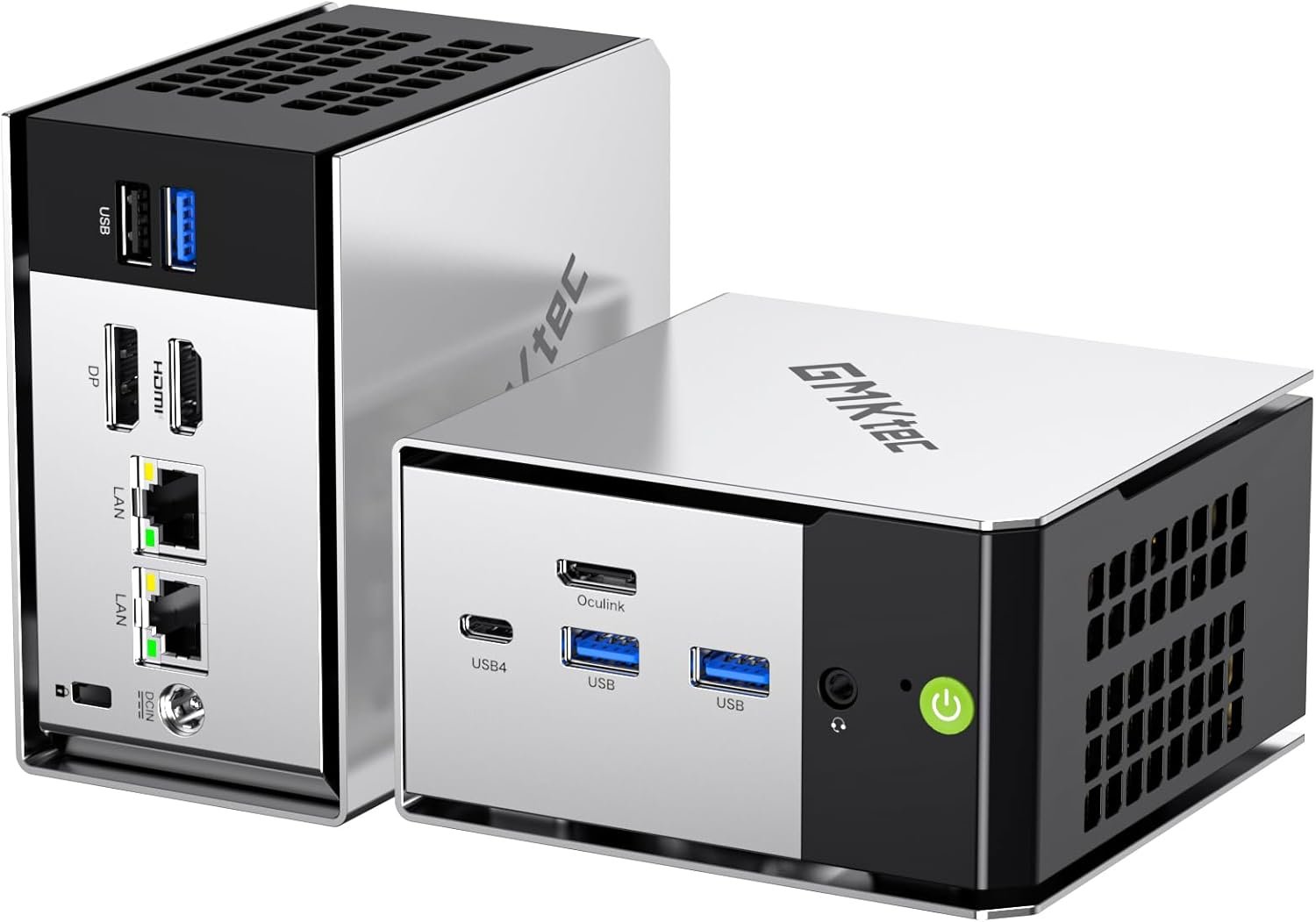
  • Clean multi monitor workstations

  • Digital signage

  • High resolution media setups

  • Compact editing or streaming rigs

Who Should Buy the GMKtec M8?

This is not a bargain office mini PC. It is for people who care about I O, networking, and expansion.

It makes the most sense if you:

  • Run a homelab

  • Want dual 2.5G networking

  • Need USB4 for fast external storage

  • Plan to experiment with OCuLink

  • Want a compact but capable virtualization host

If you need upgradeable RAM or a rock bottom budget system, this may not be the right fit. But if connectivity and flexibility matter, the GMKtec M8 is a very compelling option.

Final Thoughts

The GMKtec M8 punches above its size. With Ryzen 5 PRO performance, dual 2.5G LAN, USB4, and OCuLink, it offers features that are still rare in the mini PC market.

For homelab enthusiasts and power users, this is one of the more interesting compact systems currently available.

Check current pricing here:
👉 https://amzn.to/4snuw8l
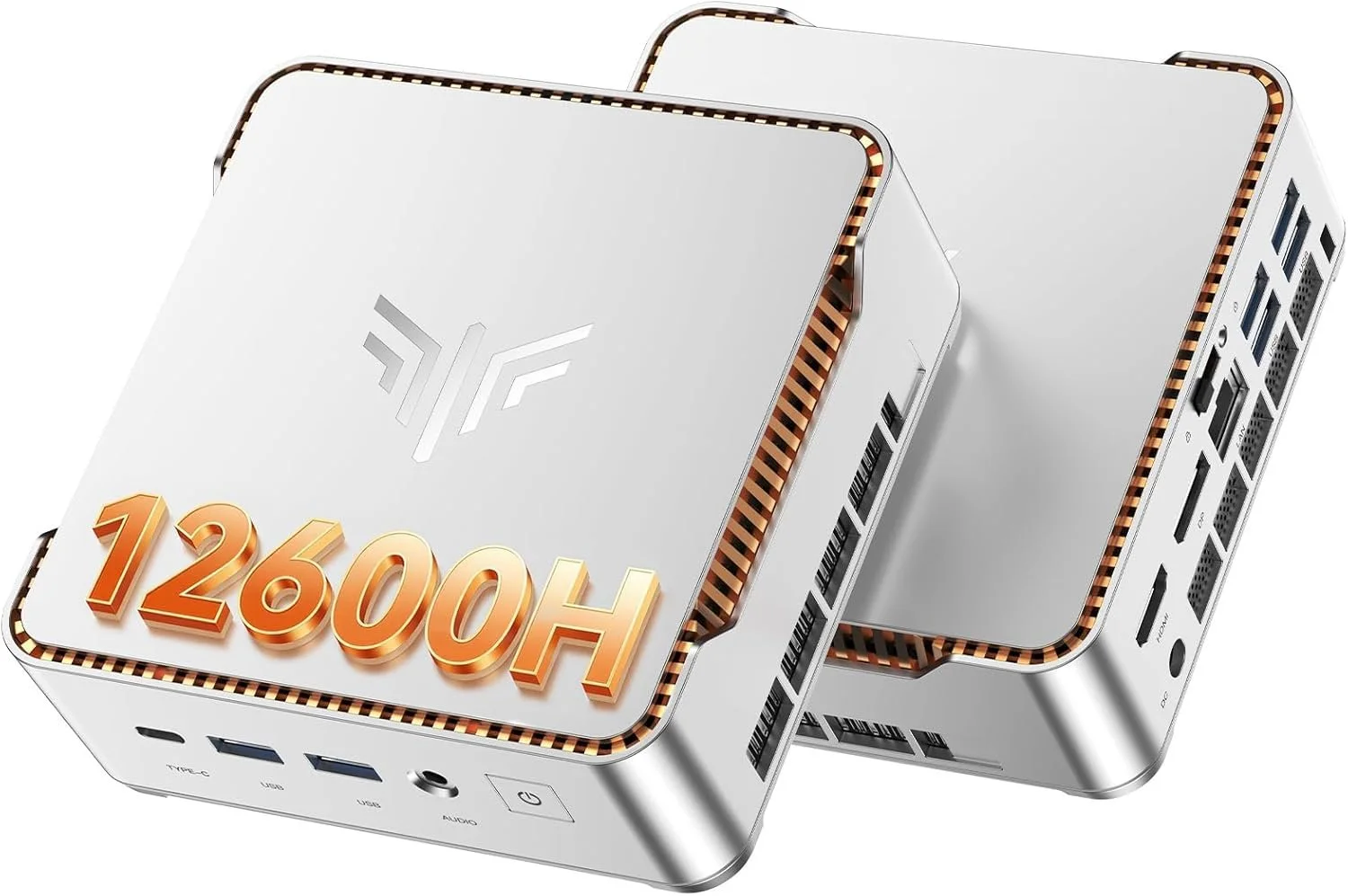
KAMRUI Pinova P2 Mini PC Review (16GB / 512GB) – Intel i5-12600H Power in a Tiny Desktop

If you’ve been looking for a mini PC that actually performs like a real desktop, the KAMRUI Pinova P2 Mini PC (16GB RAM / 512GB SSD) deserves serious attention.

This is not one of those ultra-low-power office boxes. Inside this compact metal chassis is an Intel Core i5-12600H, a 12-core, 16-thread processor that boosts up to 4.5GHz. That is a legitimate laptop-class CPU, and it completely changes what you can expect from a mini PC at this size and price.


Core Specs – KAMRUI Pinova P2 (16GB / 512GB)

  • CPU: Intel Core i5-12600H (12 cores, 16 threads)

  • RAM: 16GB DDR4 dual channel

  • Storage: 512GB NVMe PCIe SSD

  • Graphics: Intel Iris Xe

  • Networking: Wi-Fi 6 + Bluetooth 5.2 + Gigabit Ethernet

  • Display Support: Up to triple 4K @ 60Hz

  • OS: Windows 11 Pro

  • Expandable Storage: Additional M.2 slot

For productivity, homelab use, light gaming, emulation, and content creation, this is a very capable configuration.

Real Performance Expectations

The i5-12600H is the star of the show here. With its hybrid core design, you get strong single-core performance for everyday tasks and plenty of multi-core power for heavier workloads.

This mini PC feels fast in real use:

  • Smooth multitasking with dozens of Chrome tabs

  • Video playback and streaming with zero issues

  • Light photo and video editing

  • Emulation and light gaming

  • Plex server or home server use

  • Office and business workloads

If you are upgrading from an older 8th or 9th gen Intel desktop, you will absolutely feel the jump in responsiveness.

Stability Testing – OCCT Pro Certified

I stress tested this unit using OCCT Pro, running sustained CPU, memory, and power load testing. The system completed extended stress testing with zero errors and earned a System Platinum Stability Certificate.

That means no crashes, no throttling issues, and no instability under heavy load during testing.

You can learn more about OCCT Pro here:
https://www.ocbase.com/occt/pro

For a compact mini PC, passing extended stability testing is a big deal.

Who This Mini PC Is For

This KAMRUI Pinova P2 makes sense for:

  • Home office setups

  • Students who want real performance

  • Homelab builders

  • Plex server users

  • Small business deployments

  • Clean minimalist desk setups

  • Anyone who wants desktop power without a giant tower

It is especially compelling if you want strong CPU performance without stepping into full custom desktop pricing.

Ports and Expandability

You get a very usable port selection, including HDMI, DisplayPort, USB-C, and multiple USB 3.2 ports. It supports up to triple 4K displays at 60Hz, which makes it excellent for productivity and trading setups.

Inside, there is room for storage expansion via an additional M.2 slot, which is always something I look for in mini PCs.

Final Thoughts

The KAMRUI Pinova P2 16GB / 512GB configuration hits a sweet spot.

You get a real 12-core i5 processor, enough RAM for serious multitasking, fast NVMe storage, Wi-Fi 6, Windows 11 Pro, and strong stability under load. In this price bracket, that combination is hard to beat.

If you want something small but legitimately powerful, this is one of the more interesting mini PCs available right now.

Check current price and availability here: https://amzn.to/4kkkq4u

GMKtec K16 Mini PC Review (Ryzen 7 7735HS): A Small PC That Feels Like a Real Desktop

If you have been shopping for a mini PC lately, you have probably noticed two extremes: tiny boxes that feel underpowered, and “high end” mini PCs that get expensive fast. The GMKtec K16 lands in a sweet spot. It is compact, fast enough for real work, and loaded with the kind of ports and connectivity that actually make a mini PC useful.

In this post, I am focusing on the GMKtec K16 with the AMD Ryzen 7 7735HS, and I will also link to the two most common configurations people ask about: 32GB RAM with 1TB storage, and 32GB RAM with 512GB storage.

This did pass the OCCT Platinum test certificate: https://www.ocbase.com/stabilityCertificate/699c2605a51848139eba960b

I now use OCCT Pro for all of my testing: https://www.ocbase.com/occt/pro

Quick Summary: Who the GMKtec K16 Is For

The GMKtec K16 is a great fit if you want:

  • A small desktop for everyday use that never feels sluggish

  • A compact editing machine for 4K video timelines, proxies, and content workflows

  • A home office PC that can drive multiple displays cleanly

  • A light home lab box with fast networking options

  • A living room PC that is easy to mount and easy to hide

If your main goal is modern AAA gaming at high settings, this is not that. It can handle light gaming and esports style titles, but it is not a replacement for a dedicated gaming tower.

Performance: Ryzen 7 7735HS Is the Real Deal

The headline feature is the AMD Ryzen 7 7735HS. This chip has 8 cores and 16 threads, which matters because mini PCs often cut corners with lower-power CPUs. In real-life use, that translates into the K16 feeling responsive even when you are doing multiple things at once:

  • Dozens of Chrome tabs

  • Lightroom exports

  • A 4K timeline in your editor

  • Background downloads

  • Multiple monitors

It is the kind of mini PC you can actually use as a primary computer without constantly thinking about what you should close to “keep it snappy.”

Graphics: Radeon 680M Is Surprisingly Capable

The integrated Radeon 680M graphics are one of the biggest reasons this system feels more “desktop like” than older mini PCs. You are not buying this for high-end gaming, but it is absolutely capable for:

  • Light gaming

  • Emulation

  • Photo editing

  • Smooth 4K playback

  • GPU-accelerated creative apps

For creators, it is the overall balance that matters. CPU performance plus decent integrated graphics makes a big difference.

Storage: 1TB vs 512GB, Which One Should You Buy?

Both configurations can work, but here is the simple rule:

Get the 1TB version if you do any of these:

  • Video editing

  • Storing lots of footage locally

  • Installing multiple big apps or games

  • Running VMs or Docker images

  • Keeping a large photo library on the internal drive

The 512GB version is fine if:

  • You mostly stream media or store files in the cloud

  • You mainly do office work, web, and light creative tasks

  • You already have external SSDs and a workflow that uses them

Most people who message me after buying a mini PC regret underbuying storage, not overbuying it. If the price difference is not painful, 1TB is usually the move.

Ports and Connectivity: This Is Where the K16 Stands Out

A lot of mini PCs look good on paper until you actually try to plug your stuff in. The K16 is much more practical.

You get modern connectivity like USB4, WiFi 6E, Bluetooth 5.2, and dual 2.5G Ethernet. That makes it easier to use as:

  • A workstation with fast external SSDs

  • A home server or NAS companion

  • A multi-monitor desk setup

  • A travel-friendly editing box

Dual 2.5G Ethernet is a big deal if you do anything with local network storage, large file transfers, or a faster home lab setup.

Setup Ideas: How I Would Use It

Here are a few real ways this makes sense:

A YouTube workstation

Pair it with a fast external SSD and you have a clean editing and upload setup that takes up almost no desk space.

A home office PC

If you want a quiet, compact Windows machine that feels fast for years, this checks the box.

A mini home lab node

Dual 2.5G Ethernet opens up some fun options for routing, storage, or self hosted services.

My Bottom Line

The GMKtec K16 hits that rare combo: compact, powerful, and practical. The Ryzen 7 7735HS has enough CPU horsepower to feel like a real desktop, and the overall feature set makes it easy to recommend for creators, home office setups, and anyone who wants a small PC that does not feel compromised.

If you are on the fence between 512GB and 1TB, I lean 1TB for most people, especially if you do any kind of content creation.

Affiliate Links

If you want to support what I do, here are the exact models:

K16 AMD Ryzen 7 7735HS 32GB+1TB: https://amzn.to/4r0nZP0
K16 AMD Ryzen 7 7735HS 32GB+512GB: https://amzn.to/3OOd8KC


🧠 GMKtec NucBox K12 Mini PC Review: Small Body, Serious Power

If you’ve been looking for a mini PC that can actually replace your desktop, the GMKtec NucBox K12 deserves a look. It’s built around the AMD Ryzen™ 7 H255 processor with Radeon 780M graphics, delivering eight Zen 4 cores and sixteen threads of power in a palm-sized case that runs quiet and efficient.

⚙️ Hardware & Core Specs

  • CPU: Ryzen 7 H255 (8 cores / 16 threads, 3.8 GHz base to 4.9 GHz boost)

  • GPU: Radeon 780M (12 cores up to 2600 MHz)

  • Fabrication: TSMC 4 nm FinFET

  • Performance modes: 35 W quiet / 54 W balanced / 65 W turbo

  • OS: Windows 11 Pro

Despite its size, the K12 delivers desktop-grade performance and sustains boost clocks without throttling thanks to its efficient cooling design.

💾 RAM & Storage Configurations

Available options:

  • Barebone – add your own RAM and SSD

  • 32 GB DDR5 + 1 TB SSD

  • 64 GB DDR5 + 1 TB SSD

It supports up to 128 GB DDR5 (5600 MT/s) and offers three M.2 PCIe 4.0 slots (2 × 4.0×2 + 1 × 4.0×4) for a total capacity of 24 TB. That makes it ideal for editors, developers, or anyone who needs massive local storage in a small chassis.

🧊 Cooling & Build Quality

The K12 uses a dual-fan vapor chamber system with intelligent temperature control. Even under heavy load, it stays quiet and stable. The metal housing feels premium and adds to heat dissipation, while the minimal aesthetic looks great on a desk or entertainment center.

🔌 Ports & Connectivity

Front I/O

  • USB-C (USB 3.2 Gen 2, PD/DP/Data)

  • 2 × USB 3.2 Gen 2 Type-A

  • USB 2.0

  • 3.5 mm audio combo jack

  • Power button with LED + Clear CMOS

Rear I/O

  • HDMI 2.1 and DisplayPort 1.4

  • USB4 (40 Gbps + PD + DP 1.4)

  • Oculink port (PCIe Gen 4×4) for eGPU

  • Dual 2.5 G LAN (Realtek 8125BG)

  • Extra USB 3.2 + USB 2.0

  • Fan/LED control button

Wireless: Wi-Fi 6E (2.4 Gbps) + Bluetooth 5.2

🖥️ Display & Performance

Supports quad 4K output via HDMI, DP, USB4, and Type-C. The Radeon 780M handles 4K video editing and media playback smoothly, and light gaming runs better than expected for integrated graphics. Multitasking feels snappy across modes, and power draw remains efficient.

💡 Why It Stands Out

  • Triple PCIe 4.0 SSD slots (up to 24 TB)

  • Up to 128 GB DDR5 RAM

  • Oculink eGPU support

  • Dual 2.5 G LAN + Wi-Fi 6E

  • Quad 4K display support

  • Quiet dual-fan cooling

  • Premium metal build

💸 Pricing & Availability

  • Barebone: ≈ $549.99

  • 32 GB RAM + 1 TB SSD: ≈ $549.99

  • 64 GB RAM + 1 TB SSD: ≈ $749.99

Includes free worldwide shipping and a 1-year warranty.

🎯 Who It’s For

  • Creators and editors needing a compact workstation

  • Gamers pairing with an external GPU

  • Home lab and NAS enthusiasts

  • Professionals seeking portable desktop performance

  • Anyone wanting a quiet, powerful PC that fits anywhere

🗣️ Final Thoughts

The GMKtec NucBox K12 proves that mini PCs can be both powerful and practical. With Ryzen 7 H255 performance, massive storage expandability, and eGPU support through Oculink, it’s a desktop replacement that doesn’t take up desk space.

If you want a compact system that can do it all—from 4K editing to server tasks—this is the one to beat.

🔗 Buy Here

👉 GMKtec NucBox K12 Mini PC on Amazon

KAMRUI GK3Plus Mini PC Review: Compact Power at an Affordable Price

If you’ve been searching for a powerful yet budget-friendly desktop replacement, the KAMRUI GK3Plus Mini PC is worth a serious look. Packed with the 12th Gen Intel Alder Lake N95 processor, 16GB of RAM, and a 512GB M.2 SSD, this small but mighty machine delivers surprising performance for its size and price.

👉 Check it out here: KAMRUI GK3Plus Mini PC on Amazon

Performance That Punches Above Its Price

At the heart of the GK3Plus is Intel’s Alder Lake N95 CPU, a quad-core processor capable of reaching up to 3.4GHz. Compared to older chips like the N5105 or N5095, it offers a 35% CPU boost and up to 78% better graphics performanceAmazon.com_ KAMRUI GK3Plus Mini…. That means smoother multitasking, faster app launches, and enough power to handle office work, video streaming, and even light photo editing.

Memory and Storage

The KAMRUI GK3Plus ships with 16GB DDR4 RAM, making it responsive even when multiple apps are running. Storage comes in the form of a fast 512GB M.2 SSD, ensuring snappy boot times and quick file access. Need more space? You can expand with a 2.5” SATA SSD or HDD, supporting up to 2TB total storageAmazon.com_ KAMRUI GK3Plus Mini….

Compact and Versatile Design

Measuring just 5.1 × 5.1 × 1.96 inches and weighing less than 2 pounds, this mini PC fits anywhere—on a desk, under a TV, or mounted behind a monitor with the included VESA mount. The sleek silver finish blends easily into both office and home environments.

Display and Graphics

Equipped with Intel UHD Graphics (1.20 GHz), the GK3Plus supports 4K at 60Hz resolution across three displays simultaneously (dual HDMI + VGA). That makes it perfect for multi-monitor productivity, home theater setups, or running a media server like PlexAmazon.com_ KAMRUI GK3Plus Mini….

Connectivity

Despite its small size, the GK3Plus offers plenty of ports and connections:

  • 2× USB 3.2 + 2× USB 2.0

  • 2× HDMI + 1× VGA

  • Gigabit Ethernet (RJ45)

  • Mic-in & audio-out

It also includes dual-band WiFi 5 and Bluetooth 4.2, making it easy to connect accessories and peripherals.

Who Is It For?

This mini PC is an excellent choice for:

  • Home office users who need reliable performance in a compact form factor.

  • Students who want an affordable but capable machine.

  • Media enthusiasts looking for a quiet 4K-capable streaming or Plex box.

  • Light gamers & emulator fans who want casual gaming in a small package.

Final Verdict

The KAMRUI GK3Plus Mini PC is a fantastic value at around $200. While it’s not designed for heavy gaming or demanding creative workloads, it’s more than capable for productivity, streaming, and everyday use. With its compact size, quiet operation, and upgradeable storage, it’s one of the best budget-friendly mini PCs you can buy in 2025.

👉 Grab it here: KAMRUI GK3Plus Mini PC on Amazon