GMKtec M8 Mini PC Review: Ryzen 5 PRO 6650H with Dual 2.5G and OCuLink

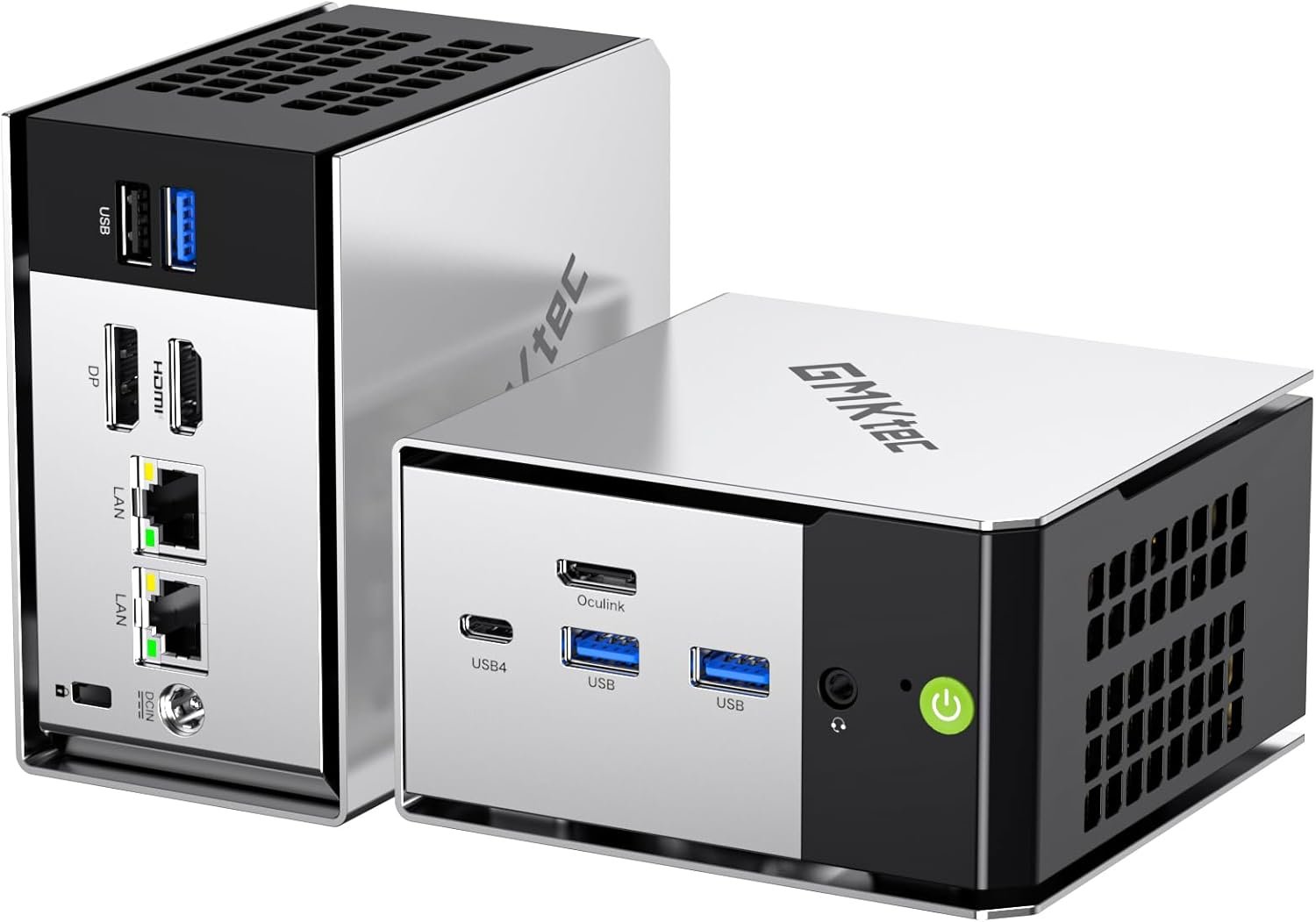
The GMKtec M8 mini PC is not your typical compact desktop. On paper, it looks like another small Ryzen-powered box, but once you look at the ports and internal expansion, it becomes clear this system is aimed at power users, homelab builders, and anyone who needs serious connectivity in a tiny footprint.


Ryzen 5 PRO 6650H Performance

At the heart of the GMKtec M8 is the AMD Ryzen 5 PRO 6650H. This is a 6-core, 12-thread Zen 3+ processor built on a 6nm process. It boosts up to 4.5 GHz and can run up to 40 watts in performance mode.

In real-world use, that means:

  • Smooth multitasking

  • Strong performance for virtualization and containers

  • Plenty of power for Proxmox, Docker, and home server workloads

  • Comfortable 4K media playback

  • Light content creation and casual gaming with the Radeon 660M iGPU

This is laptop-class silicon, but configured in a way that makes it feel closer to a low-power desktop experience.

Serious Networking: Dual 2.5G LAN

One of the standout features of the GMKtec M8 is dual 2.5 gig Ethernet. That immediately puts it in homelab territory.

You can use it for:

  • Router or firewall builds

  • Network segmentation

  • High-speed NAS connections

  • Virtualized network labs

  • Redundant or bonded connections

With WiFi 6E and Bluetooth 5.2, this system's connectivity is far beyond what most mini PCs offer.

USB4 and OCuLink Expansion

This is where the M8 really separates itself.

You get:

  • USB4 with up to 40Gbps bandwidth

  • DisplayPort output through USB4

  • Power delivery support

  • OCuLink for direct PCIe Gen4 x4 expansion

OCuLink is rare in this price class. It opens the door to external GPUs or high-speed PCIe storage solutions without the overhead of traditional USB enclosures. Just remember that OCuLink is not hot-plug safe. Always power down before connecting or disconnecting.

For anyone building a compact but expandable system, this is a big deal.

Storage and Memory

The GMKtec M8 ships with:

  • 16GB LPDDR5 6400MT per second memory

  • 512GB or 1TB PCIe NVMe SSD

The RAM is onboard and not upgradeable, so plan accordingly. However, you do get two M.2 2280 PCIe 4.0 slots internally, supporting large NVMe drives. That means you can scale storage significantly for media servers, backups, or VM labs.

This is NVMe only. SATA drives are not supported.

Triple Display and 8K Support

The M8 supports HDMI, DisplayPort, and USB4 video output for triple monitor setups. It even supports up to 8K output.

For most users that translates to:
  • Clean multi monitor workstations

  • Digital signage

  • High resolution media setups

  • Compact editing or streaming rigs

Who Should Buy the GMKtec M8?

This is not a bargain office mini PC. It is for people who care about I O, networking, and expansion.

It makes the most sense if you:

  • Run a homelab

  • Want dual 2.5G networking

  • Need USB4 for fast external storage

  • Plan to experiment with OCuLink

  • Want a compact but capable virtualization host

If you need upgradeable RAM or a rock bottom budget system, this may not be the right fit. But if connectivity and flexibility matter, the GMKtec M8 is a very compelling option.

Final Thoughts

The GMKtec M8 punches above its size. With Ryzen 5 PRO performance, dual 2.5G LAN, USB4, and OCuLink, it offers features that are still rare in the mini PC market.

For homelab enthusiasts and power users, this is one of the more interesting compact systems currently available.

Check current pricing here:
👉 https://amzn.to/4snuw8l
GMKtec K16 Mini PC Review (Ryzen 7 7735HS): A Small PC That Feels Like a Real Desktop

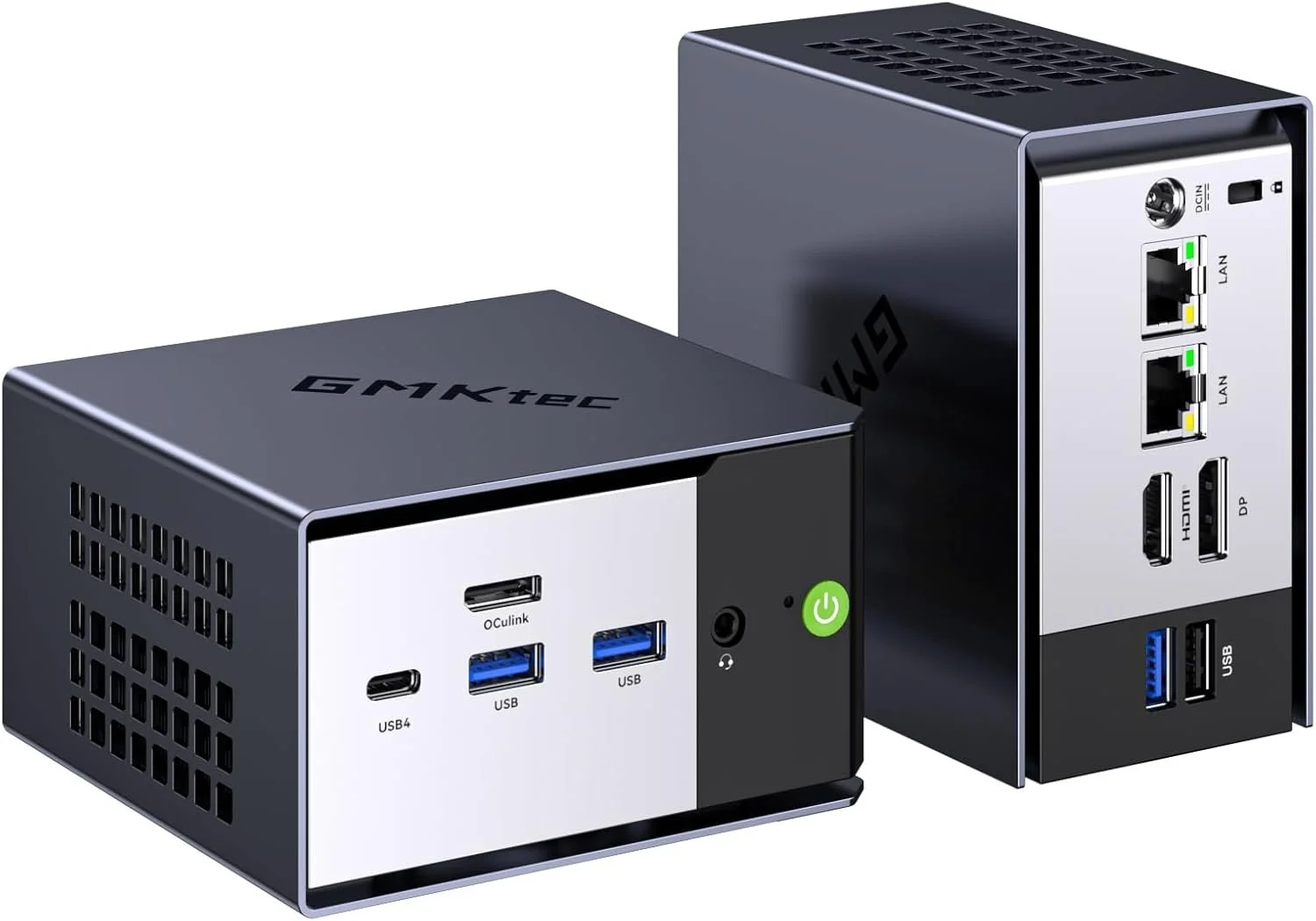
If you have been shopping for a mini PC lately, you have probably noticed two extremes: tiny boxes that feel underpowered, and “high end” mini PCs that get expensive fast. The GMKtec K16 lands in a sweet spot. It is compact, fast enough for real work, and loaded with the kind of ports and connectivity that actually make a mini PC useful.

In this post, I am focusing on the GMKtec K16 with the AMD Ryzen 7 7735HS, and I will also link to the two most common configurations people ask about: 32GB RAM with 1TB storage, and 32GB RAM with 512GB storage.

This did pass the OCCT Platinum test certificate: https://www.ocbase.com/stabilityCertificate/699c2605a51848139eba960b

I now use OCCT Pro for all of my testing: https://www.ocbase.com/occt/pro

Quick Summary: Who the GMKtec K16 Is For

The GMKtec K16 is a great fit if you want:

  • A small desktop for everyday use that never feels sluggish

  • A compact editing machine for 4K video timelines, proxies, and content workflows

  • A home office PC that can drive multiple displays cleanly

  • A light home lab box with fast networking options

  • A living room PC that is easy to mount and easy to hide

If your main goal is modern AAA gaming at high settings, this is not that. It can handle light gaming and esports style titles, but it is not a replacement for a dedicated gaming tower.

Performance: Ryzen 7 7735HS Is the Real Deal

The headline feature is the AMD Ryzen 7 7735HS. This chip has 8 cores and 16 threads, which matters because mini PCs often cut corners with lower-power CPUs. In real-life use, that translates into the K16 feeling responsive even when you are doing multiple things at once:

  • Dozens of Chrome tabs

  • Lightroom exports

  • A 4K timeline in your editor

  • Background downloads

  • Multiple monitors

It is the kind of mini PC you can actually use as a primary computer without constantly thinking about what you should close to “keep it snappy.”

Graphics: Radeon 680M Is Surprisingly Capable

The integrated Radeon 680M graphics are one of the biggest reasons this system feels more “desktop like” than older mini PCs. You are not buying this for high-end gaming, but it is absolutely capable for:

  • Light gaming

  • Emulation

  • Photo editing

  • Smooth 4K playback

  • GPU-accelerated creative apps

For creators, it is the overall balance that matters. CPU performance plus decent integrated graphics makes a big difference.

Storage: 1TB vs 512GB, Which One Should You Buy?

Both configurations can work, but here is the simple rule:

Get the 1TB version if you do any of these:

  • Video editing

  • Storing lots of footage locally

  • Installing multiple big apps or games

  • Running VMs or Docker images

  • Keeping a large photo library on the internal drive

The 512GB version is fine if:

  • You mostly stream media or store files in the cloud

  • You mainly do office work, web, and light creative tasks

  • You already have external SSDs and a workflow that uses them

Most people who message me after buying a mini PC regret underbuying storage, not overbuying it. If the price difference is not painful, 1TB is usually the move.

Ports and Connectivity: This Is Where the K16 Stands Out

A lot of mini PCs look good on paper until you actually try to plug your stuff in. The K16 is much more practical.

You get modern connectivity like USB4, WiFi 6E, Bluetooth 5.2, and dual 2.5G Ethernet. That makes it easier to use as:

  • A workstation with fast external SSDs

  • A home server or NAS companion

  • A multi-monitor desk setup

  • A travel-friendly editing box

Dual 2.5G Ethernet is a big deal if you do anything with local network storage, large file transfers, or a faster home lab setup.

Setup Ideas: How I Would Use It

Here are a few real ways this makes sense:

A YouTube workstation

Pair it with a fast external SSD and you have a clean editing and upload setup that takes up almost no desk space.

A home office PC

If you want a quiet, compact Windows machine that feels fast for years, this checks the box.

A mini home lab node

Dual 2.5G Ethernet opens up some fun options for routing, storage, or self hosted services.

My Bottom Line

The GMKtec K16 hits that rare combo: compact, powerful, and practical. The Ryzen 7 7735HS has enough CPU horsepower to feel like a real desktop, and the overall feature set makes it easy to recommend for creators, home office setups, and anyone who wants a small PC that does not feel compromised.

If you are on the fence between 512GB and 1TB, I lean 1TB for most people, especially if you do any kind of content creation.

Affiliate Links

If you want to support what I do, here are the exact models:

K16 AMD Ryzen 7 7735HS 32GB+1TB: https://amzn.to/4r0nZP0
K16 AMD Ryzen 7 7735HS 32GB+512GB: https://amzn.to/3OOd8KC